Additive Manufacturing — Nebo, North Carolina

Metal 3D Printing for Injection Molds

Brown Tool & Mold offers metal 3D printing using the Xact Metal XM200G powder bed fusion system. We produce conformal cooling inserts, complex mold components, and functional metal parts that traditional machining cannot achieve — faster, at lower cost, with better thermal performance.

Why Metal 3D Printing?
  • Reduce Cycle TimeConformal cooling cuts cooling time by 30–50% vs. straight-drilled waterlines
  • Complex GeometriesBuild shapes impossible with conventional machining
  • Mold Component RepairRestore worn mold components faster than replacement
  • Faster PrototypingMetal parts in days, not weeks
Xact Metal XM200G
Conformal Cooling Specialists
Mold Component Repair
Nebo, North Carolina
Fast Lead Times
What We Do

Metal 3D Printing for Injection Molds

Metal 3D printing — also called metal additive manufacturing — is the process of building metal parts layer by layer from metal powder using a laser. For injection mold makers, this technology unlocks capabilities that are simply not possible with conventional CNC machining or EDM.

At Brown Tool & Mold, we use our Xact Metal XM200G powder bed fusion system to produce conformal cooling inserts for injection molds, complex mold components, and functional metal parts for industrial applications throughout North Carolina and across the United States.

The biggest impact of metal 3D printing in injection mold making is thermal performance. Conformal cooling channels — channels that follow the contour of the part geometry — can only be produced through additive manufacturing. They bring coolant closer to the mold surface, extract heat faster, and deliver dramatically shorter cycle times. Learn more in our injection mold cooling design guide.
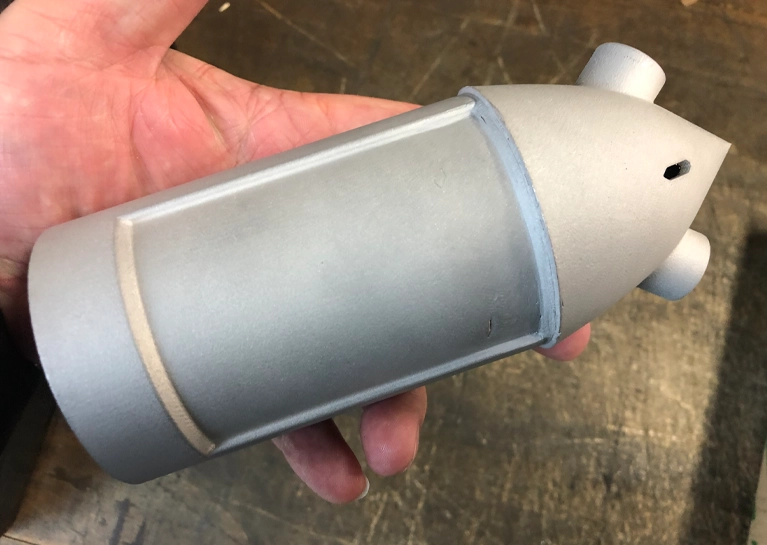
Xact Metal XM200G metal 3D printer at Brown Tool and Mold in Nebo NC
Applications

Metal 3D Printing Applications

Our metal additive manufacturing capability supports tooling and industrial applications where conventional machining falls short. Here is where it makes the biggest difference.

Conformal Cooling Inserts

The most impactful use of metal 3D printing for injection molds. Conformal cooling channels follow part geometry — reducing cycle time by 30–50%, improving temperature uniformity, and cutting warpage and sink defects. Learn more in our cooling design guide.

Mold Component Repair

Metal 3D printing allows us to restore worn or damaged injection mold components — cores, cavities, gates, and slides — faster and more cost-effectively than traditional repair or full replacement. Extend the life of your existing tooling investment.

Complex Metal Components

Internal channels, lattice structures, undercuts, and consolidated assemblies that are impossible or prohibitively expensive with CNC machining. Metal additive manufacturing eliminates those constraints and produces functional end-use metal parts for industrial applications.

Prototype Metal Parts

Need a functional metal prototype in days rather than weeks? Our metal 3D printing service produces accurate, production-representative parts fast — letting you validate designs and fit-form-function before committing to production tooling.

Lightweight Structures

Lattice and topology-optimized designs reduce part weight without sacrificing structural performance. Ideal for fixtures, brackets, and tooling components where weight and strength both matter.

Production Metal Parts

For low-to-mid volume production runs where metal 3D printing is more cost-effective than machining — especially for complex geometries with internal features. We support both prototype and production additive manufacturing programs.

The Biggest Benefit

Conformal Cooling Inserts

In most injection molding operations, cooling time accounts for 60–80% of total cycle time. That is the single biggest lever available for reducing production cost and improving throughput — and it is directly controlled by how well your mold removes heat.

Traditional straight-drilled waterlines cannot follow the contour of complex part geometry. The result is uneven cooling, hot spots, longer cycles, and quality issues like warpage, sink, and dimensional variation. Conformal cooling inserts — produced through metal 3D printing — solve this problem by placing cooling channels exactly where heat needs to be removed, following the shape of the part.

Brown Tool & Mold designs and produces conformal cooling inserts, integrating them as part of our complete mold design and manufacturing process. Read the full technical detail in our injection mold cooling design guide.

Potential 30–50% Cycle Time Reduction
Uniform Mold Temperature
Reduced Warpage and Sink
Improved Part Dimensions
Better Cosmetic Consistency
Lower Cost Per Part
Side by Side

Straight-Drilled vs. Conformal Cooling

How does traditional cooling compare to conformal cooling inserts produced by metal 3D printing? Here is the breakdown across the metrics that matter to mold buyers.

Factor Straight-Drilled Cooling Conformal Cooling (3D Printed)
Cooling Channel Path Straight lines only — limited by drill access Follows part geometry at any angle or curve
Cycle Time Baseline 30–50% reduction in most applications
Temperature Uniformity Hot spots common in complex geometry Uniform heat removal across entire cavity
Warpage Risk Higher — uneven cooling causes differential shrink Significantly reduced
Part Quality Inconsistencies possible due to hot spots and uneven cooling Improved surface finish, dimensional accuracy, and cosmetic consistency
Tooling Cost Lower upfront cost Higher upfront — ROI through cycle savings
Best For Simple geometry, lower volumes, cost-sensitive programs Complex geometry, high volume, tight dimensional specs
Our Equipment

Xact Metal XM200G Specifications

Brown Tool & Mold operates the Xact Metal XM200G — an industrial powder bed fusion metal 3D printer delivering exceptional accuracy, repeatability, and build quality at production speed.

SpecificationXM200G Value
ProcessPowder Bed Fusion (PBF)
Laser ConfigurationSingle or Dual Laser
Scan SystemHigh-Speed Galvanometer
LensPremium F-Theta for micron consistency
Laser AreasOverlapping dual-laser work areas
Material PlatformOpen — multiple metal alloys supported
SoftwareModern architecture, flexible build prep
Powder HandlingIntegrated system

Machine Features

  • Single or dual laser configuration for speed and flexibility
  • Overlapping dual-laser work areas maximize build efficiency
  • High-speed galvanometer with water-cooled performance option
  • Premium F-theta lens for optimized micron consistency across the scan field
  • Open material platform — not locked to proprietary powders
  • Large build volume for injection mold inserts and components
  • Modern software architecture for flexible build preparation
  • Integrated powder handling for efficient, repeatable operation
Is It Right for Your Project?

When to Choose Metal 3D Printing

Metal additive manufacturing delivers the strongest return when conventional machining cannot achieve required geometry or thermal performance. Here are the situations where it makes the most sense.

Complex Geometry

Internal channels, undercuts, lattice structures, or consolidated assemblies that CNC machining cannot produce.

High Production Volume

When cycle time reduction through conformal cooling delivers measurable ROI across millions of shots.

Tight Dimensional Specs

Parts with warpage or dimensional variation driven by uneven cooling that straight-drilled waterlines cannot solve.

Fast Turnaround Needed

When you need a functional metal component or prototype part in days rather than the weeks required for machined tooling.

Our Process

How Our Metal 3D Printing Process Works

From your first inquiry to a finished metal part, our process is straightforward, fast, and integrated with our broader mold design and machining capabilities.

01

Design Review

Send us your CAD file. Our engineering team reviews your design for printability, material selection, and support strategy — and recommends any DFM improvements before printing begins.

02

Build Preparation

We prepare the build file, orient the part for optimal properties and support removal, and set machine parameters for your chosen material and application requirements.

03

Metal 3D Printing

The Xact Metal XM200G fuses metal powder layer by layer using a high-powered laser — building your part with precision and repeatability inside a controlled atmosphere chamber.

04

Post-Processing

Support removal, stress relief, and any required CNC machining or grinding to achieve final dimensional tolerances and surface finish specifications.

Explore More

Related Mold Making Services

Metal 3D printing at Brown Tool & Mold is fully integrated with our injection mold manufacturing capabilities. Here is how it connects to our other services.

Common Questions

Metal 3D Printing FAQ

Common questions about metal additive manufacturing and conformal cooling at Brown Tool & Mold.

What is metal 3D printing for injection molds?

Metal 3D printing uses a laser to fuse metal powder layer by layer into complex parts. For injection molds, the primary application is producing conformal cooling inserts — components with cooling channels that follow part geometry — which are impossible to manufacture with conventional drilling. The result is faster cycle times, better part quality, and improved thermal control. See our cooling design guide for full details.

What is conformal cooling and why does it matter?

Conformal cooling uses channels that follow the contour of the mold cavity rather than running in straight lines. Because cooling time accounts for 60–80% of injection molding cycle time, optimizing heat removal is the single biggest lever for reducing production cost. Conformal cooling inserts produced by metal 3D printing can reduce cycle time by 30–50% in many applications while also cutting warpage and dimensional variation.

What machine do you use for metal 3D printing?

Brown Tool & Mold operates the Xact Metal XM200G — an industrial powder bed fusion (PBF) system with single or dual laser configuration, overlapping work areas, a premium F-theta lens, and an open material platform. The XM200G is designed specifically for industrial tooling and precision metal parts.

What materials can you print in metal?

The Xact Metal XM200G uses an open material platform, meaning we are not locked to a single supplier. Common materials for injection mold tooling applications include tool steels and stainless alloys. Contact our team to discuss material selection for your specific application and performance requirements.

Can metal 3D printing repair existing injection molds?

Yes. Metal additive manufacturing is well-suited for mold component repair — restoring worn cores, cavities, gate areas, and slides without full replacement. This extends mold life and reduces downtime cost significantly compared to building a new component from scratch. Contact us to discuss your repair program.

Do I need to be in North Carolina to use your 3D printing services?

No. Brown Tool & Mold provides metal 3D printing services to customers across the United States. We can receive your CAD files electronically, print and post-process your parts at our offices, and ship finished components directly to you. Contact us to get started.

Get Started

Ready to Explore Metal 3D Printing for Your Mold?

Send us your CAD file or describe your application and our engineering team will evaluate whether metal 3D printing — including conformal cooling — is the right solution for your program.

Nebo, North Carolina
(937) 620-4261
Xact Metal XM200G
MoldGuard™ Backed

Get Your Quote

Please provide us with some basic information and we'll be Intouch shortly!